Showing posts with label 1970's. Show all posts

Thursday, June 19, 2014

Playing Indian by Philip J. Deloria (1970's- Present, Ethnicity and Race)

Playing Indian 
by Philip J. Deloria 

1970's- Present
Ethnicity and Race


Thesis:
At various points in a American history, Americans have imitated the Indian identity to create new identities or relationships for themselves in regards to others. This seldom reflects any real true native america identity or truths. Ever present in Americans playing indian is the unspoken contradiction of what has happened and is happening to the real Native Americans as a result of American nationhood.
Specific examples/evidence that supports the thesis:
Boston Tea Party: Colonists dressed as Indians to illustrate their natural right to the land and self rule and to differentiate themselves from Europeans and the English.
Fraternities of the late 18th century- Playing Indian to give themselves an invented heritage and "wed themselves to an essential American nationalism."
Wodcraft Indians and Camp Fire Girls- dressing kids up as Indians and teaching them the proper places of Men and Women and "the importance of authenticity in the modern world."
Cold War Indian Lore Hobbyists- "Sought to come to terms with an uneasy middle-class identity that was at once celebrated and attacked."

Summary:
Intro-

Ch 1- The colonists viewed and utilized the contradiction of the noble savage to both justify their presence on the continent as well as justify their rebellion against Europe and fight for independence.
Playing indian was used in two distinct ways: 1. Carnival, because times of celebration often bridged the gaps between what was acceptable and what was not, carnival was a time when the boundaries between savage and civilized were broken down. In misrule, playing Indian gave colonists an identity that separated them from their european counterparts. They wanted to make a statement about their right to live and rule the land being dominant over the English.

Ch 2- In the late 18th century, people formed many different societies, some were based on indians like the Tammany Society and the Red Men. They used the indian identity to give a historic past to their society and thus a greater importance and impact (like how the knights templar are associated with the Free Masons).

Conclusion: Playing indian has never had much to do with real indians. It has been a way to object to the mainstream (whether that's colonial rule, modernism, individualism, etc.) to play indian. Most recently, non-native Americans play indian to try to connect with a more basic natural lifestyle. Very seldom do these indian players have any real understanding or desire to live anything identifiable to actual native Americans, it's more a statement against the American way of life.
What does this tell us about Race and Ethnicity in the 1970's - Present day?
The identity of indian has been molded and conformed to fit what white people wanted. Little respect has been granted to Native American people. When the identity of indian was adapted for white people's uses it was also associated with a past version or make believe mythic version of indian, not the people that exist during the present day.


What parts of the book can be applied to lectures?
No clue, American's have a dysfunctional relationship with our past and the treatment of Indians. 
General Thoughts:
The most interesting idea in the book (to me) is the audacity of white Americans to further dismiss the native inhabitants of this land by mocking them for their own purposes. I'm not sure how a historical record of all the unbelievable ignorance of white people "playing indian" is a helpful resource. It more just goes further to prove the absolute ignorance of the people of this county in regards to our ancestors' actions and the overt take over of an entire continent of people. I'm frustrated that the same people who can claim their right to land by using the Indian metaphor can in the same stroke push the boundaries and take over the land of actual native people. 

Excerpts from Book Reviews
"In Playing Indian , Philip J. Deloria argues that the figure of "the Indian" holds an important position in American culture. Indian-ness has through centuries provided 'impetus and precondition for the creative assembling of an ultimately unassemblable American identity.' " (The Historian)

One reviewer noted that this is not only an American phenomenon that this has occurred in other parts of the world, like Australia.


My Highlighted Passages
"Indian-White relations and Indian play itself have modeled a characteristically American kind of domination in which the exercise of power was hidden, denied, qualified of mourned." (pg. 187)

"At the same moment that it was suggesting Indians' essential place in the national psyche, playing Indian evoked actual Indian people and suggested a history of conquest, resistance and eventual dependency." (pg. 186)

"Indian play was not so much about a desire to become Indian- or even to become American-as it was a longing for the Utopian experience of being in between, of living a paradoxical moment in which absolute liberty coexisted with the absolute." (pg. 185)

" Indians were first and original Americans, and taking on Indian identity was in fact a moment of no return for rebellious colonists. If Indian-ness was critical to American identities, it necessarily went hand in hand with the dispossession and conquest of actual Indian people." (pg. 182)


Monday, June 16, 2014

City of Quartz By Mike Davis (1970's, Class and Economy & Ethnicity and Race)

City of Quartz
By Mike Davis

1970's-Present
Class and Economy
Ethnicity and Race
Front Cover
Thesis: In City of Quartz, Mike Davis demonstrates how the city of L.A. has been developed to protect business and the elite while forcing the poor into pockets divided from the rest of society. This has resulted in a city with no cultural identity, no support for the arts, and integration of diversity despite the unparalleled diversity of the population.
 From a review "class division as the primary motor of Los Angeles's progress and development"


Specific examples/evidence that supports the thesis: Law enforcement and downtown business has made war on the homeless, introducing things like "bum-proof" benches and persecuting every attempt to create safe homeless communities or encampments within the downtown. Poor neighborhoods are sealed off. Dividing the poor neighborhoods from the rich is entrenched in the built environment of LA.


Summary:
Prologue:
In the preface, the author describes his feeling of pessimism over the future of L.A. Economically L.A. expanded to accommodate business but not it's population. The freeways are a world renowned disaster, and income gap continues to widen. Services for the poor, or even the middle class are almost non-existent, from public transportation to public ERs.

CH 1: Sunshine or Noir?
Davis explores the development of LA through the "ruins of it's alternate futures." Meaning he delves into failed communities and ventures that occurred throughout LA's history. i.e. Llano del Rio, a socialist town that fiourished breifly from 1914 to 1918
CH 2: Power Lines
 This chapter attempts to trace the tranisitions of power in LA from the days of the Californio's onward. Californios were overthrown by American's who married into the families and grew power out of the Cattle industry that fed the miners in Sacramento until a huge drought destroyed the economy (and killed the cattle). Railroad money from SF bought up huge tracks of So-Cal land. They wanted to bring the railroad south to stimulate their new investment. 1886-1889 there was huge burst of development around the railroads, despite the crash of 1889 huge infrastructure had been est. Building up the harbor to increase commerce was organized by General Otis with the Free Harbor League. They created the worlds largest man made port.
CH 3: Homegrown Revolution

CH 4: Fortress LA


CH 5: The Hammer and the Rock

CH 6: New Confessions

CH 7: Junkyard of Dreams
This chapter documents the rise and fall of the city of Fontana. Originally developed as a 

What does this tell us about Class and Economy in the 1970's - Present day?
The author puts more emphasis on class relations than race relations as he describes a city built with physical and metaphorical walls between the rich and the poor. Class is how neighborhoods are divided. The poor are allowed to remain in the discarded or hopeless parts of the city that the rich don't see economic gain coming from. The only way to maintain the environment for the poor is the continued violence that makes the area unacceptable to those who are financially better off.

What does this tell us about Ethnicity and Race in the 1970's - Present day?
L.A. has a massive and diverse population however the culture of L.A. seems to lack the diversity that would be expected. Instead, residents cling to a false culture created by the Ramona myth. And a post-modern invented culture that embraces international expositions and no real appreciation of the people who live in the city itself.
In LA

What parts of the book can be applied to lectures?

General Thoughts:
The author is a marxist historian, so it isn't surprising that he would find class as a major factor in the development and politics of LA.

Excerpts from Book Reviews: 
"The class stuggle is also a struggle to control and shape the built environment."

"in today's disposable culture, the historian has no choice but to search for truth in the rubble of commodity
production."

My Highlighted Passages: 

Thursday, June 12, 2014

All The President's Men by Bernstein and Woodward (1970's, Politics)

All The President's Men 
By Bernstein and Woodward

1970's-Present
Politics
Thesis: 
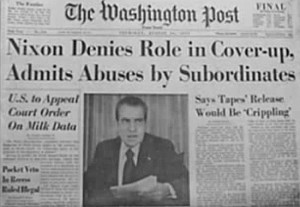
The Nixon administration buried a massive scandal and tried to pin it on the underlings when in fact, Nixon himself had been running covert operations using government resources to undermine his political opponents.The journalist investigation that uncovered this led to a revolution in journalism. 
Specific examples/evidence that supports the thesis:


Summary:
This book follows the investigative journalism of Carl Bernstein and Bob Woodward (of the Washington Post) that led to the uncovering of the Watergate Scandal. The president was deeply protected by many layers of lower officials who first tried to take to the blame for the strategy and plan to wire-tap the Democratic National Committee office. Once the entire story came out, it was realized that this particular event was small potatoes. In fact, the administration was using the CIA and FBI to conduct investigations on political opponents and wire tap to find dirt. This is how Nixon hand picked his political opponent for the presidency and squashed the campaigns of people he was worried might actually beat him.

This episode in history created a major skepticism towards the U.S. government and political morality.Also the abuse of power and misuse of government resources really changed how people saw the president and his power.
What does this tell us about Politics in the 1970's - Present day?
This historic episode along with the Vietnam War really changed the way American's viewed their government. It could no longer be assumed that the government would operate with America's best interests at heart.

What parts of the book can be applied to lectures?


General Thoughts:
It was interesting that the Washington Post had a really hard time pursuing the story, in that, they were encouraged to drop it because no other major news sources were doing it, also when Sloan recanted his story, he made them look like liers inventing stories. It was the first time that journalists really uncovered something of this magnitude. Journalism could actually change things and right wrongs, it was very inspiring for the profession

The Book was actually written because it was requested by Robert Redford how wanted to star in a movie version of their story.
Excerpts from Book Reviews: 

"This was a new kind of jolt to the American psyche about government, and it came on top of the already disconcerting experience of the Vietnam War, which really got people thinking about American government and policy. You had a whole new scrutiny that grew out of the Vietnam era and Watergate that changed tremendously how people — especially young people — looked at government. "

"Bernstein and Woodward found such people(people unhappy with their jobs/bosses, etc) in the White House, in the Justice Department, in the FBI, in the CRP, and even in competing news-gathering organizations. The people were rare and hard to find, but Bernstein and Woodward found that if they pushed against enough doors, eventually one would open."

" At one point, "Deep Throat" says that -the Administration was bugging throughout its tenure, and that the bugging of the Democratic National Committee in the Watergate was "only natural." "The arrests in the Watergate sent everybody off the edge because the break-in could uncover the whole program."

My Highlighted Passages: 

Monday, June 9, 2014

The World Split Open By Ruth Rosen

The World Split Open 
By Ruth Rosen

1970's-Present (Gender)

Thesis:
The 2nd Wave feminist movement completely transformed the lives of modern day women yet few are conscious of the accomplishments and the work left to be done.

Summary:
The book is organized into four parts—
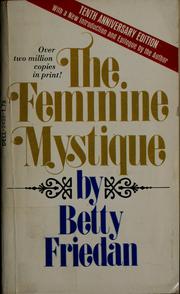
1.      Refugees from the Fifties: In the 1950’s women were expected to be the perfect picture of domesticity. They vacuumed in heals and had warm cookies on the table when their children got home. In the evening they were expected to be the perfect lover for their husbands. The American home was a large part of the vision for the Anti-Communist Cold War agenda. Women struggled to enter the workforce as jobs were seen as taken away from men who needed them. Women were the ultimate consumer and companies constantly advertised to women, showing them they weren’t whole without this or that. Massive rise in cosmetics, and women’s clothing sales. The Feminine Mystique was published and painted a picture of miserable unsatisfied women struggling desparately to find any meaning in their lives. The book is widely read and many women relate but it fails to link all women together as it focuses mainly on white suburban middle class women.
2.      Rebirth of Feminism
3.      Through the Eyes of Women
4.      No End in Sight

What does this tell us about Gender in the 1950's - Present day?
First wave feminism got women the right to vote and put them in classrooms along with the boys. 19th C.
Second Wave feminism took root in the 1960's as women became disenchanted with their role as mother and wife. Women were  harassed and marginalized in the work place, if they ever got a job. They were limited to what they could accomplish by their sex. In the 1960's many women began to feel passionate about not repeating the lives of their mothers, they wanted more. These women became active in movements for social change but found that here too they were seldom heard. They were given the jobs of secretaries and their opinions were little valued. They were also often used as groupies, and expected to be sexual partners for the men in the movements. Eventually, these women became outraged at their treatment and took their knowledge to form a feminist movement of their own. Many women's organizations rose up, including NOW (The National Organization for Women started in 1966 founders inc. Betty Friedan). Women were encouraged to form Conscious Raising Groups where they would meet to discuss different topics about how they were treated differently and what limitations were put on their lives by their sex. They complained about their husbands, chores, sex, but also about how society boxed them up into a specific role. They found that their problems and complaints were not only theirs but shared by most of the women around them. They built solidarity and eventually outrage at their mistreatment. 

What parts of the book can be applied to lectures?
Women suffered sexual harassment or were fired for not being receptive to advances
Harvard
Help wanted ads were divided by sex
Feminists actually never used bra burning as a publicity tool, although the press promoted this idea. During one march women set fire to objects that seemed to symbolize the abuse and objectification of women and the pile may have included bras along with countless other items.

General Thoughts:
The World Split Open is a valuable and comprehensive book on the history and impact of the American women’s movement from the 1950s to the 1990s.
Excerpts from Book Reviews: 
Scholars of modern feminism will value this book for its research and for being the first to treat the women’s movement as a national phenomenon of broad political sweep, but they will miss a persuasive explanation of why, by Rosen’s own account, the challenges she describes so effectively were not more successful in bettering women’s lives.
My Highlighted Passages:
Since this book covers the entire second half of the twentieth century, I knew my first task was to explain how Cold War culture and its ideas about gender patrolled the boundaries between men and women, gay and straight, patriotic and subversive. For those who weren’t there, it’s necessary to grasp how much the immediate postwar era suppressed dissent, glorified motherhood, celebrated women’s biological difference, and sanctified the nuclear family, all of which led to a revolt against that decade’s cultural icon of motherhood"
Before the revolution, during the 1950s, the president of Harvard University saw no reason to increase the number of female undergraduates because the university’s mission was to “train leaders,” and Harvard’s Lamont Library was off-limits to women for fear they would distract male students. Newspaper ads separated jobs by sex; employers paid women less than men for the same work. Bars often refused to serve women; banks routinely denied women credit or loans. Some states even excluded women from jury duty.
I wanted to evoke the remarkable passion and accomplishments of that powerful moment in our history—and perhaps the future history of women worldwide—without romanticizing it, or ignoring the many mistakes, squandered opportunities, and failures of imagination that are part of every life and every movement.
Feminism became palatable to American mainstream culture by addressing the individual woman, rather than women as a group.
The Soviet Union’s launch of the first space satellite, Sputnik, in 1957, shocked the nation. Were Americans behind Russians in science and technology? It seemed inconceivable, but the evidence was overhead. Government and educational leaders knew that the Soviets educated both sexes in math and in the sciences. Reeling from the enemy’s technological feat, the United States decided to educate not just boys but girls, too, in math and science.
The Pill, which would be approved in 1960, was not yet on the horizon. It is difficult to even imagine what life was like for adventurous young women at a time when abortion remained illegal.
Turpentine, when ingested or introduced by douche, soap or detergent might have been forced up the cervix. Potassium permanganate tablets, pushed into the vagina to stimulate bleeding that emergency-room doctors might then see as a miscarriage
In the post-World War II era, any independent radical critique of American society could be—and regularly was—discredited by being associated with Communism, and with the Soviet Union in particular. In such a chilling political atmosphere, cultural and social critics of all sorts risked stigma, as well as unemployment.
And so the myth spread that women’s liberationists burned bras as an act of defiance. A sexy trope, the media used it to sell papers. In a breast-obsessed society, “bra-burning” became a symbolic way of sexualizing—and thereby trivializing—women’s struggle for emancipation.in 1975,
conventional wisdom, held that a man could rape neither a wife nor a prostitute
Diana Russell, whose pioneering book The Politics of Rape reached a wide audience in 1975, should be credited as the major archaeologist who unearthed the secret of marital rape.
By 1997, all fifty states in the United States had criminalized marital rape.
For black women, rape was not only a sexual violation, it was also a symbol of white power and their double subordination as black women.
What stayed in the American imagination was black male attacks against white women, the exact opposite of historical reality.
Before the women’s movement, few Americans had realized how many relatives sexually violated young girls.
Before the seventies, few women ever dared to admit that they had been beaten. The police, who regarded domestic violence as a private matter, rarely interfered. During the 1970s feminists renamed wife-beating—which sounded more like a traditional custom than a crime—“
In the process, they helped to redefine wife-beating as neither a custom nor a private matter, but as a felony.
The idea that a man’s sexual predatory habits on the job should be illegal had simply never occurred to most women.
Once named, sexual harassment seemed to be everywhere.
At colleges and universities, male faculty sometimes demanded sexual favors from students in return for high grades or letters of recommendation. In business, men often made promotions contingent on a woman’s willingness “to put out.
 In San Francisco, the flamboyant and politically astute Margo St. James, herself a former prostitute, organized a union of prostitutes in 1973 called COYOTE, an acronym that stood for “Call Off Your Old Tired Ethics.” COYOTE successfully provided prostitutes with adequate counsel and persuaded public defenders to prosecute crimes that had actual victims.

pornography inspired violent fantasies that men might then act out on women
Oddly enough, pundits and journalists didn’t seem to notice that feminists had unearthed so many hidden injuries or that they had spent the decade trying to find some kind of equality within the sexual revolution. Instead, journalists and pundits happily buried the decade as though nothing of significance had occurred. The seventies, they said with a sigh of relief, were finally over. They were tired of Americans indulging in
By the 1990s, for example, many young women possessed an awareness of date rape and sexual harassment inconceivable to their mothers,
In a culture increasingly titillated by victimology, the image of woman as victim received far more publicity than stories that recounted feminists’ courageous determination to challenge the norms and customs of American culture and society.
By sharing life stories and questioning the “natural order of things,” women could begin to see their condition through their own eyes.millions of other women have shared this experience.
American women had believed they were among the most emancipated women in the world.
Now they understood that the hyperindividualism of American political culture framed juggling work and family life as an individual problem. Discovering their subordinate status suddenly threw everything in doubt.
Suddenly, you knew that other women shared your grievances, that cultural and institutional discrimination could explain what had previously seemed like personal inadequacy.
Cumulatively, they brought consciousness-raising out of the living room and into the public arena.
On March 8, 1911, American working women had celebrated the First International Women’s Day with parades and demonstrations. The ritual quickly spread to other countries. Due to its radical and socialist origins, Americans had long ago stopped commemorating the event.
There were thousands of protests, rallies, and marches. All over the country, feminists invaded by 
Creating Ms., Steinem left a legacy for which she would be rightfully remembered: she helped educate millions of women to see the world through their own eyes.
defend cherished values and customs, many men and women, within the United States as well as elsewhere, mobilized to prevent their women from turning into the iconic image of the emancipated
Western woman—a sexually and economically independent person, seemingly unprotected by her family and unmoored from her community.
derided modern feminists as “Dependency Divas”—women who sought government assistance for working families and the poor.
office. Bush restored the Reagan-era global gag rule, which prohibited any international agency from receiving U.S. funds if it performed abortions, lobbied to make abortion legal, or even provided counseling about the procedure.
The Bush administration, for example, repeatedly tried to ban abortion by conferring “personhood” on the fetus.
“abstinence only” courses to teenagers.

Wednesday, June 4, 2014

The Seventies: The Great Shift in American culture, Society, and Politics

The Seventies: The Great Shift in American culture, Society, and Politics
By Bruce Schulman

Thesis: The long seventies (1968-1974) have had a profound impact on the conservative leaning of America today. This decade began the religiously inspired, Sunbelt, small government conservatism that still exists today. Also Reagan’s legacy of increasing US military budget and intervention in world affairs, persist today.

Summary:
Schulman exhibits his thesis during several chapters that discuss:
1969-1976
-Nixon’s Presidency disillusions American’s about politicians and big government.
-Issues of racism take a new form, as ethnic identities struggle for differentiation and respect, instead of integration, diversity is to be respected.
-American’s search for spiritual fulfillment and spur the 3rd great awakening
-The south and the West rise to power politically, economically, and culturally
1976-1979
-The Carter Admin. faulters along with economy. The era of stag flation. Consumerism explodes as money continually loses value. Americans become credit based.
-Culturally, Americans are disenchanted and anti-authoritarian sentiment rises, giving way to punk music and dark films/tv
-Women fight to extend their roles as equals in society and deny the traditional home role. Man likewise, rise against the John Wayne stereotype, and embrace emotions/family life.
1979-1984
Reagan’s administration promises a war on taxes and claims to minimize the federal gov. Meanwhile they increase the national debt and military budget while intervening in world affairs.
However, the Cold War also ends soon after and America is restored as a world power of influence.

What does this tell us about Gender in the 1970's - Present day?
The 1970’s signaled a major shift in gender relations. Women took a stand against their traditional roles in the home and joined the work force and politics. They also fought against the idea that they were any better suited for family/home duties than men. Laws around divorce and abortion changed. Men also shifted their ideology and became more involved in family life and less relied upon as the sole breadwinner of the family. Male fulfillment shifted from financial and career success to other sectors.

What does this tell us about Race and Ethnicity in the 1970's - Present day?
The rise of the South. Southern egregious racism had been squelched by federal law, so the racist backwards reputation of the South was finally being overcome. Issues of racism take a new form, as ethnic identities struggle for differentiation and respect, instead of integration, diversity is to be respected.
From African Americans and the Civil Rights Movement spurred a general sense of ethnic identity amongst minorities. During Carter’s administration an inquiry into the internment camps of World War II resulted in reparations to Japanese Americans. This era spurred the affirmative action reform in colleges but started as a government requirement to have minority’s quotas for companies that received government contracts. Civil companies followed suit and hired diversity specialists. The American Indians embraced their culture and became more politically active, disputing broken treaties with the US gov, including taking over Alcatraz Island because it was unused American gov property.

What does this tell us about Religion in the 1970's - Present day?
Disillusioned Americans started to examine their spirituality. The communes of the 1960’s faded away or became more mainstream alternative living groups. The American passive Protestant attitudes shifted to more hardline evangelical ideals. Religion became more mainstream. The third great awakening brought many Americans back to the church and longing for the old days of America, causing a resurgence in the mainstream popularity of country music (associated with the south) and Christian mainstream music like “Spirit in the Sky”.

What does this tell us about Politics in the 1970's - Present day?
The author argues that the present day conservative stand on government and the shift away from FDR’s New Deal strategies of government intervention all stem from this era. Starting with the disgust of Nixon’s stunning immoral political manipulation and over law breaking, to frustration with Carter’s inability to stabilize the economy and the massive inflation rates along with increasing government oversight and programs, and finally with Reagan’s appeal to reduce taxes and federal government programs. The American people began to long for the gold old days when state government played the biggest role and presidents were spokesmen to maintain US power abroad. The South and the Western US rose to power, and the traditionally NE dominated government dissolved.

The rise of the South. Southern egregious racism had been squelched by federal law, so the racist backwards reputation of the South was finally being overcome. With the rise of industry, the space program, military installations, and the elderly moving south, population began to soar.


What parts of the book can be applied to lectures?
Interesting stuff……
Country Joe, Hippies Song “Vietnam Song”
The first Rambo displays the disillusionment the American people suffered as a result of the failure in Vietnam. Rambo II is symbolic of Reagan’s Admin and how he determined to no longer have our hands tied and to go full force to win the Cold War through intervention in many countries. There was the name “Ronbo” given to Reagan and his head put on Sly’s Rambo poster.


Resurgence in the mainstream popularity of country music (associated with the south) and Christian mainstream music like “Spirit in the Sky”.
1984 Year of the Yuppie, time magazine

General Thoughts:
Altomont Vs. Woodstock-> Made the hippies seems like a potentially violent group, no longer mellow protestors
Nixon told America what they already knew, that the president was a corrupt political position. It didn’t really change the public opinion of government. Confidence was already waning
The rise of the South. Southern egregious racism had been squelched by federal law, so the racist backwards reputation of the South was finally being overcome. With the rise of industry, the space program, military installations, and the elderly moving south, population began to soar. The third great awakening brought many Americans back to the church and longing for the old days of America, causing a resurgence in the mainstream popularity of country music (associated with the south) and Christian mainstream music like “Spirit in the Sky”.
THE REAGAN ADMIN:
The first Rambo displays the disillusionment the American people suffered as a result of the failure in Vietnam. Rambo II is symbolic of Reagan’s Admin and how he determined to no longer have our hands tied and to go full force to win the Cold War through intervention in many countries. There was the name “Ronbo” given to Reagan and his head put on Sly’s Rambo poster. Reagan’s admin became involved in Grenada, El Sal, Nica, Lebanon. It was clear that America supported Reagan’s power stance as long as no US soldiers were do the fighting. Reagan dramatically increased military spending.
However economy was one of the big issues, his administration had to face. He first blamed Carter (that’s original) and then set forth to do massive cuts to government spending. Cut taxes, cut spending.

Excerpts from Book Reviews: 
2 Major Shifts
1. “The decade transformed American politics and culture in two critical-and several lesser-respects. Most significantly, the South "rose again." During the 1970s, Schulman explains, the balance of political power shifted to thriving Sunbelt states in the South and the West and "the South's historic policy prescriptions-low taxes and scant public services, military preparedness and a preference for state and local government over federal supremacy-came to define the national agenda"
2. “The triumph of the market as "the favored means for personal liberation and Cultural Revolution" (p. 257). The 1970s saw a marked decline in trust in the federal government, as many Americans turned instead to the private sphere and what Schulman calls "an unusual faith in the market"
“Schulman starts his narrative with a fascinating chapter on Richard Nixon, depicting the president as a man who earned the nickname "Tricky Dick" by systematically undermining liberal programs without ever publicly attacking them. Using the examples of federal funding for the arts, low-income housing, and environmental programs, as well as the never-implemented Family Assistance Plan, Schulman demonstrates how Nixon seemed to support traditional liberal issues while simultaneously undermining the liberal power base.”

My Highlighted Passages: 
This impression could hardly be more wrong. The Seventies transformed American economic and cultural life as much as, if not more than, the revolutions in manners and morals of the 1920s and the 1960s. The decade reshaped the political landscape more dramatically than the 1930s. In race relations, religion, family life, politics, and popular culture, the 1970s marked the most significant watershed of modern U.S. history, the beginning of our own time.109

Americans developed a deeper, more thorough suspicion of the instruments of public life and a more profound disillusionment with the corruption and inefficiency of public institutions.170

Increasingly, all sorts of Americans, even those with dreams of radical reform, looked to the entrepreneur and the marketplace as the agent of national progress and dynamic social change.178

A new ethic of personal liberation trumped older notions of decency, civility, and restraint. Americans widely embraced this looser code of conduct.183

mayhem-filled years, from 1969 to 1984, the United States experienced a remarkable makeover. Its economic outlook, political ideology, cultural assumptions, and fundamental social arrangements changed.212

Nixon even conceded that “I am now a Keynesian in economics.” He embraced the idea that a humming economy was the responsibility of the federal government and that the White House should actively intervene in economic affairs, carefully calibrating the policy controls, to ensure robust growth and low unemployment. Nixon even dispensed with the gold standard, that most reassuring symbol of conservative fiscal orthodoxy.729

Watergate only intensified Americans’ alienation from public life: their contempt for the secrecy, inefficiency, and failures of “big government.”1131

But the general trends bolstered conservatives. The ultimate lesson of Watergate remained “you can’t trust the government.”1352

President Jimmy Carter represented a more conservative faction of the Democratic party: southern, fiscally responsible, suspicious of labor unions and government regulation. 861354

Along with the bonfire of political power, the Sunbelt boom ignited a cultural revival—the strongest reassertion of southern cultural identity and regional pride since the Civil War.2831

By the early 1970s, embarrassment over segregation had faded away, and the South rejoined the national mainstream on questions of race relations.2833

On the one hand, the worst excesses of southern racism had been outlawed, and African Americans began voting in southern elections.2833

Their beliefs and resentments created a potent political force. Sunbelt conservatives accomplished what Sixties radicals had only dreamed of: they captured a political party and won control of the White House.2915

Demi-rednecks formed the foundation for conservative populism, the tax revolt, and the Reaganite assault on the welfare state.2916

In Grenada, El Salvador, and Angola, it appeared that Reagan and the United States had reclaimed world leadership,5288

States lacked the wherewithal—the unchallenged economic hegemony that had underwritten the ambitious interventionism of the early cold war. After 1945, the war-revved U.S. economy so outperformed its exhausted allies and defeated enemies that Americans could afford economic sacrifices for political or strategic objectives.5319

The Reagan administration would send soldiers and sailors into combat, Weinberger explained, only if the operation had a clear objective, if the circumstances permitted the United States to marshal sufficient firepower to finish the job quickly, and if the intervention received overwhelming public support.5336

Richard Viguerie rightly labeled Reagan “a reverse Teddy Roosevelt”—a leader who spoke loudly and carried a small stick. 235351

Maintaining public approval often took precedence over standing tall. The heart of the president’s program—the centerpiece of the Reagan Revolution—was an attack on big government—the5456

“In the present crisis, government is not the solution to our problem; government is the problem.”5458

They could not fulfill Reagan’s promises of tax cuts, rearmament, and a balanced budget, at least not without massive cuts in public services.5644

Experiments in communal life and spiritual renewal had disbanded or become conventional. Rap, with its militant lyrics and contempt for racial integration, competed with country, the most conspicuous component of a southernized national culture, for control of the airwaves.6077

During the Seventies, national power shifted south and west.6096

Drawing strength from its burgeoning population and booming economy, the South and Southwest wrested control of national politics.6100

The South’s historic policy prescriptions—low taxes and scant public services, military preparedness and a preference for state and local government over federal supremacy— came to define the national agenda during the Seventies and have remained the motive forces in American public policy ever since.6105

Religion, especially the frank expression of personal spirituality, assumed a public and powerful role in American life.6112

Over the past two decades, entrepreneurship has replaced social and political activism as the source of dynamic cultural and political change in the United States.6124

The digital revolution only reinforced the conviction that technology and entrepreneurship empowered ordinary people and inspired cultural and political innovation.6133

Seventies emphasis on authenticity and freedom, on political transformation through personal liberation. But the market—in particular, starting new businesses—became the favored means for personal liberation and cultural revolution.6147

changes in attitudes, remain potent. The long, gaudy, depressing Seventies reinvented America. We live in their shadows.
Nixon wanted to destroy the liberal establishment by stripping it of its bases of support and its sources of funds.
But the era, and its climactic twelve months, have also been recalled, as “the Year the Dream Died”—the year, to quote one journalist, “when for so many, the dream of a nobler, optimistic America died, and the reality of a skeptical conservative America began to fill the void.”
Nixon also pioneered what came to be called devolution—transferring authority from the federal government to state and local governments and from the public sector to the private sphere.
Watergate was unique; it forever altered the way Americans understood politics and the presidency, the way they reported and discussed national politics, the way they conceived, investigated, and understood wrongdoing by government officials.
If one date delineated the end of the Sixties and the beginning of the Seventies, it was the year 1968.

Wednesday, May 14, 2014

The Mayor of Castro Street by Randy Shilts: 1970's-Present, Gender & Politics

Thesis:

Specific examples/evidence that supports the thesis:

Summary:
Harvey Milk was an ardent advocate of gay rights and helped make the Castro neighborhood what it is today. He ran for SF Board of Supervisors.
He had to fight against a political machine that was making the major decisions in the city. At the time SF was growing into a tourist and business center and politicians were in industry pockets.
He rallies support of labor, the teamsters union

What does this tell us about Gender in the 1970's - Present day?
There was a gay rights movement in Germany in the early 20th century but it was put to an end when the Nazi's killed 200,000 of them in death camps during the holocaust, the second largest group next to Jews.
SF had a seen during and following the Gold Rush, many of the gay bars ran until they were closed down during prohibition. After the 1906 Earthquake, the religious community claimed that the wrath of God had been incurred upon the city because of all the homosexual sin occurring there.

What does this tell us about Politics in the 1970's - Present day?
Harvey tried to run a grass roots campaign. He shook a lot of hands, worked the press, made alliances with the teamsters (a very conservative organization) and the city Firefighters. His volunteers were composed of friends, local supporters but not the gay rights organizations. The gay rights organizations felt that Harvey didn't pay his dues by helping them before his run for office. They felt he needed to volunteer and help the community before he deserved their support. He argued that gay people would never get into office if they didn't support and vote for each other.

What parts of the book can be applied to lectures?

General Thoughts:
Written by a gay reporter, this book is candid but decidedly favorable of Milk. He glosses over his insatiable sexual appetite and tendency towards promiscuity as well as his abusive treatment of his long time partner, Scott.
Surprised to learn that Milk was not out and afraid of being outed early in his adult life.
He Bought all his suits at thrift stores for under 10$.
Cut his hippie hair to fit into politics.
Used media manipulation to make his campaign look more successful than it was.

Excerpts from Book Reviews: 

My Highlighted Passages: